Collection: Emergency Lighting

Our emergency lighting range provides reliable illumination to help maintain safe escape routes and visibility when normal power is interrupted.

From LED emergency bulkheads and exit signs to downlights, twin spots, conversion kits and central battery systems, we supply solutions for commercial, industrial and public buildings.

Choose the right emergency lighting for your application, whether you're fitting out a new installation, replacing existing equipment or upgrading an emergency lighting system.

Use cases

Commercial and workplace premises

Emergency lighting is commonly used in offices, shops, workshops, factories, warehouses and other commercial premises to help maintain safe movement and visibility if normal lighting fails.

Escape routes and exits

Emergency lighting helps illuminate corridors, stairways, changes of direction and final exits so that occupants can identify and follow escape routes when normal lighting is unavailable.

Open areas and larger spaces

Open area emergency lighting can help reduce the risk of panic and provide sufficient illumination for people to move towards an escape route. It is commonly used in larger rooms, open-plan areas and other spaces where defined escape routes need additional illumination.

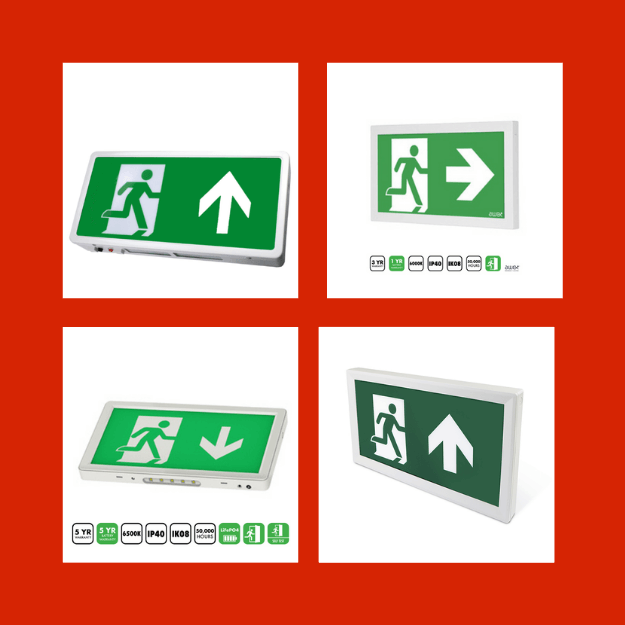
Emergency exit signage

Illuminated exit signs and blade fittings help identify emergency exits and indicate the direction of travel along an escape route. Different mounting arrangements and viewing requirements can be accommodated using suitable emergency signage.

Industrial and warehouse environments

Industrial premises, warehouses and other large working areas may require robust emergency lighting capable of providing suitable illumination across open areas, escape routes and working spaces. Twin spots and high-output emergency fittings can be useful in larger environments.

High-risk work areas

Where hazardous tasks are carried out, specialist emergency lighting may be required to provide sufficient illumination to allow the task to be made safe before evacuation. The emergency lighting design should be based on the risks and requirements of the specific area.

Plant rooms and service areas

Emergency lighting may be required in plant rooms, control rooms, switch rooms and other service areas where safe access and operation are important during a power failure.

Communal and public areas

Emergency lighting can be used in communal areas of residential buildings, public buildings, leisure facilities, places of worship and other premises where people may need to evacuate safely following a failure of the normal lighting.

Choosing the right product

Not sure which emergency lighting you need?

Start by considering what the lighting needs to achieve, the type of building or area being protected and how the emergency lighting system will be powered and tested.

Escape routes and exits

Emergency lighting for escape routes should provide suitable illumination to help occupants move safely towards an exit when the normal lighting supply fails. Bulkheads, downlights and suitable emergency fittings can be used depending on the layout and design of the installation.

Open areas and larger spaces

Open-area emergency lighting is used to provide general illumination where people may need to move towards an escape route. Consider the size and layout of the space and the required emergency lighting coverage when selecting fittings.

Emergency exit signage

Where emergency signage is required, choose an appropriate exit sign, exit box or blade fitting based on the viewing direction, mounting position and escape-route layout. Different legends and mounting arrangements are available for different applications.

Choose the right fitting type

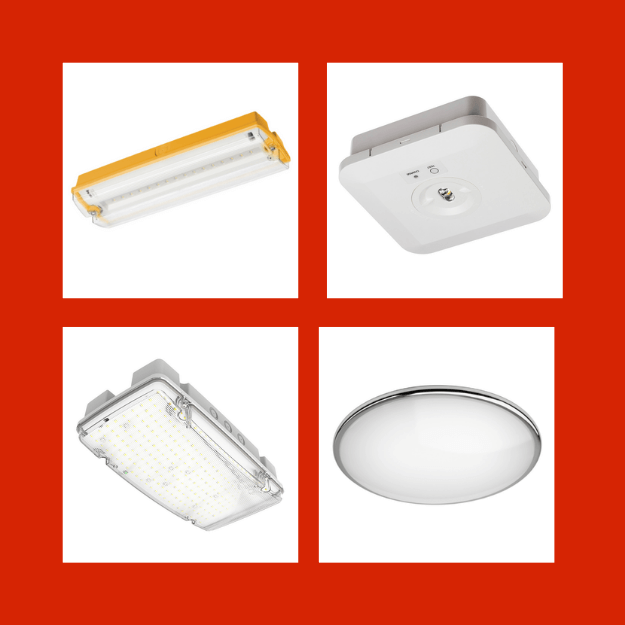
Bulkheads, downlights, twin spots, blade fittings and other emergency luminaires serve different applications. Consider the mounting position, ceiling or wall construction, light distribution and available space when selecting the fitting.

Self-contained or central battery

Self-contained emergency fittings contain their own batteries and are widely used across commercial and other buildings. Central battery systems supply emergency fittings from a separate central battery system and are more commonly used on larger buildings and estates. Make sure the fitting is compatible with the intended system architecture.

Maintained or non-maintained

Maintained emergency fittings remain illuminated from the normal supply and continue to operate from their emergency power source when the mains supply fails. Non-maintained fittings normally remain off and illuminate when the normal supply fails. The appropriate arrangement depends on the application and emergency lighting design.

Manual test or self-test

Self-contained emergency lighting can be supplied with manual testing or automatic self-test functionality. Self-test fittings carry out their own routine tests and indicate faults, which can reduce the burden of manual testing. Larger installations may also use addressable testing systems where scheduled testing and centralised monitoring are required.

Check the required duration

Emergency lighting products are commonly available with a three-hour emergency duration, but the required duration depends on the application and system design. Check the product specification and the requirements of the installation before selecting a fitting.

Need help choosing?

If you're unsure which emergency lighting product or system is appropriate, contact us with details of the building, application and existing installation. We can help with product specifications and compatibility, while the emergency lighting design should be determined by a suitably competent person.

Frequently asked questions

What is the difference between maintained and non-maintained emergency lighting?

Maintained emergency lights remain illuminated during normal operation and continue to operate from their emergency power supply when the mains fails. Non-maintained emergency lights normally remain off and illuminate when the normal lighting supply fails. The appropriate arrangement depends on the application and emergency lighting design.

How long does emergency lighting need to operate for?

The required duration depends on the premises, evacuation arrangements and risk assessment. BS 5266-1:2025 identifies a minimum one-hour duration for emergency escape lighting, with three hours appropriate in circumstances where premises may not be evacuated immediately or may need to be reoccupied before batteries have fully recharged. Always select equipment according to the requirements of the installation.

What is the difference between self-contained and central battery emergency lighting?

Self-contained emergency fittings contain their own battery and emergency power supply. A central battery system supplies multiple emergency luminaires from a separate central battery installation. Central battery systems are generally used where a larger installation benefits from a centralised power and monitoring arrangement.

How often should emergency lighting be tested?

Emergency lighting should be subject to routine testing and inspection appropriate to the installation. Regular functional testing checks that fittings operate correctly, while a full-duration test checks that the system can maintain its required emergency operation. Test results and any faults should be recorded and addressed appropriately.

Can I convert an existing light fitting to emergency operation?

In some cases, yes. Emergency conversion kits can be used with suitable existing luminaires to provide emergency operation without replacing the complete fitting. Compatibility depends on the existing luminaire, its driver or control gear and the conversion kit, so always check the manufacturer's compatibility information before purchasing.

Do I need a three-hour emergency light?

Not necessarily. The required duration depends on the type and use of the premises, evacuation arrangements and emergency lighting design. One-hour and three-hour systems are both used, so the fitting should be selected according to the requirements of the particular installation rather than simply choosing the longest duration available.

Brands we trust

Red Arrow

Red Arrow supplies a wide range of LED lighting for commercial, industrial and site applications, including a strong range of 110V site lighting. The range also includes emergency lighting, outdoor fittings and selected domestic products, supported by UK-based technical and lighting design expertise.

BLE Lighting & Power

BLE Lighting & Power is a Sheffield-based British manufacturer specialising in emergency lighting and power systems. With more than 50 years of experience, its range includes emergency lighting, central battery systems and static inverters for commercial and critical applications.