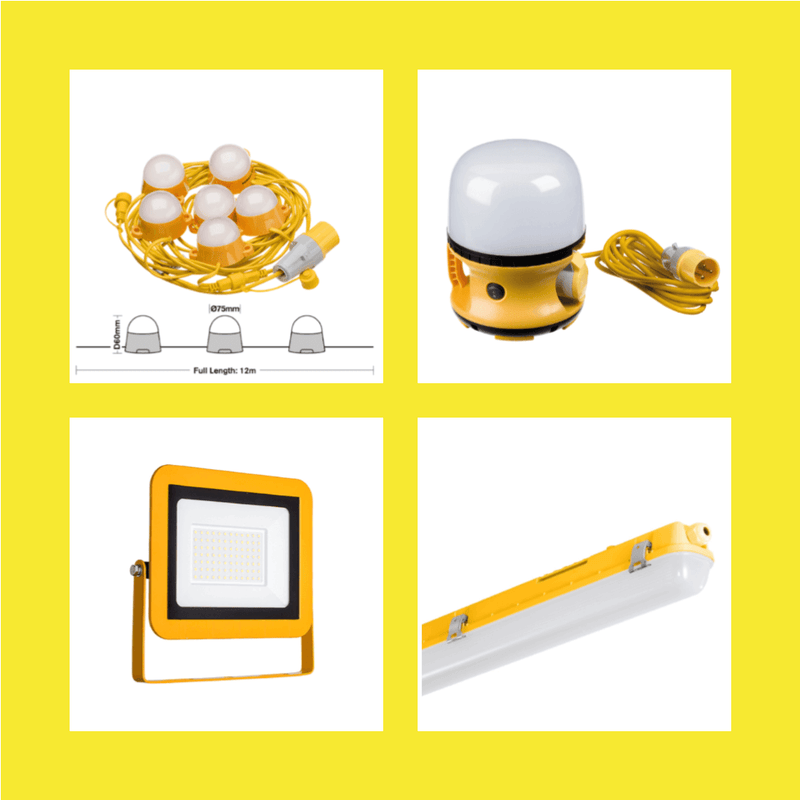
The right LED lighting depends on where it will be used, how it will be installed and the conditions it needs to operate in. These key factors can help narrow down the most suitable type of fitting.
1. Choose the correct voltage
For temporary construction sites, 110V LED site lighting is commonly used with site transformers. Permanent commercial, industrial and domestic installations generally use standard 230V mains voltage.
2. Consider the colour temperature
Colour temperature affects the appearance of the light. Warm White around 3000K can suit relaxed domestic spaces, while Cool White around 4000K is commonly used in offices, warehouses and workplaces. Daylight around 6000K can be useful where a brighter, cooler appearance is preferred.
CCT-selectable fittings give installers greater flexibility by allowing the colour temperature to be selected during installation.
3. Check the IP and IK rating
IP and IK ratings help determine whether a fitting is suitable for the environment in which it will be installed. Lower IP ratings may be suitable for dry indoor spaces, while IP65 and IP66 fittings are better suited to moisture, dust and demanding industrial or outdoor environments.
Where fittings may be exposed to impact or accidental damage, consider the IK rating as well. Higher IK ratings provide greater resistance to mechanical impact.
4. Consider emergency lighting requirements
Commercial, public and multi-occupancy buildings may require dedicated emergency lighting to provide illumination when the normal power supply fails. Emergency fittings include bulkheads, exit signs, downlights and twin-spot units.
Emergency lighting requirements depend on the building, application and overall lighting design, so individual fittings should be selected as part of the complete installation rather than viewed in isolation.