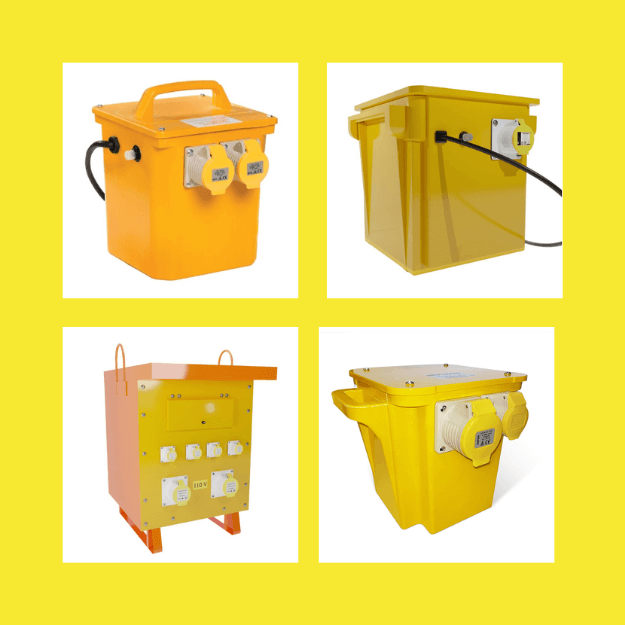
Not sure which power and distribution product you need?
Start by considering the installation, the equipment you're powering and the electrical requirements of the project. The following guide can help you identify the right type of product before you buy.
For a permanent or temporary installation
Consider where the equipment will be used and whether the installation is permanent or temporary. Indoor domestic and workshop applications may have different requirements from construction sites and other outdoor environments. Check the required IP rating where equipment may be exposed to water, dust or other demanding conditions.
Choose the correct voltage
Standard UK electrical equipment typically operates at 230V/240V, while 110V reduced-voltage equipment is commonly used for construction site tools and temporary lighting. Check the voltage required by the equipment before selecting a transformer, cable reel, extension lead or other power equipment.
Check the load and capacity
Make sure the transformer, cable, reel or extension lead is rated for the equipment you intend to power. Site transformers are rated in kVA, while cables and extension equipment have current and power ratings. Consider the total load and whether equipment will be used continuously or intermittently, and never exceed the rated capacity.
Consider circuit protection
For consumer units and other distribution equipment, the required protection will depend on the installation and the type of electrical loads being supplied. RCD and RCBO selection should take account of the equipment being connected, the installation requirements and the applicable edition of BS 7671.
Check the installation requirements
Electrical distribution equipment should be selected and installed in accordance with the requirements applicable to the installation. If you're unsure which consumer unit, protection device, transformer or other equipment is appropriate, speak to a suitably qualified electrician before purchasing.